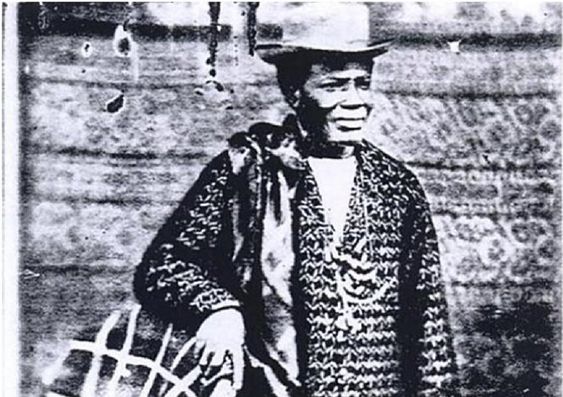
King Jaja of Opobo: Biography, History & Legacy
From Captivity to Power
Long before he became King Jaja of Opobo, he was a young boy known as Jubo Jubogha, born in an Igbo community in what is now southeastern Nigeria. His early life was shaped by violence and instability, common in the region during a period marked by inter-communal warfare and slave raiding.
Captured while still young, Jubo was taken far from home and sold into Bonny, a powerful trading kingdom along the Niger Delta. What began as a life of forced servitude would later become the foundation of an unlikely rise to power.
In Bonny, Jubo did not simply survive. He observed. He learned how trade worked, how alliances were built, and how power moved through the palm oil economy that connected African merchants to European companies.
Learning the Rules of Trade
Bonny operated on a complex “house system,” where wealth and influence were built through loyalty, trade control, and patronage. Jubo proved himself valuable within this system. Over time, he earned trust, responsibilities, and eventually freedom.
As his role expanded, so did his influence. He built his own trading networks, managed large volumes of palm oil exports, and developed relationships with European traders who depended on African middlemen to access the interior.
By the time he was known as Jaja, he was no longer just a former slave. He had become a central figure in Bonny’s commercial life.
Breaking Away to Build Opobo
Power in Bonny came with rivalry. Trade disputes and political tensions deepened, and Jaja found himself caught between competing interests.
Rather than remain trapped in a system that limited his authority, he made a decisive move.
In 1869, Jaja led his followers away from Bonny and established a new settlement along the Imo River. The settlement became Opobo.
What began as a breakaway community quickly developed into a structured kingdom. Jaja assumed the title Amanyanabo, placing himself at the center of Opobo’s political and commercial life.
From Opobo, he controlled river access, regulated trade, and positioned himself as the gatekeeper between European firms and inland producers.
A Calculated Standoff With Empire
The British wanted open access. Jaja wanted control.
European merchants pushed for direct trade with interior communities. Jaja refused. Not out of hostility, but out of strategy. Control of access meant control of wealth and influence.
This standoff was not fought with guns at first. It was fought with paperwork, treaties, accusations, and diplomacy. British officials framed Jaja as an obstacle to “free trade.” Jaja saw himself as protecting Opobo’s economic independence.
The tension simmered for years.
Betrayal and Exile
In 1887, King Jaja accepted an invitation for what he believed would be negotiations. Instead, he was arrested by British officials and removed from his kingdom.
There was no trial in any modern sense. He was placed on a ship and sent into exile.
From Opobo to the Caribbean. From the Caribbean to England. His removal was not just personal — it broke the political backbone of Opobo’s control over trade.
Weakened by illness and displacement, Jaja was eventually allowed to return to Africa. He never made it home.
He died in 1891 in Tenerife.
What Remains
King Jaja’s story is not just about a king. It is about a man who learned power inside a system designed to limit him, then used that knowledge to build something independent.
In Opobo, his structures reshaped regional trade. In Nigerian history, his story continues to raise uncomfortable questions about commerce, colonialism, and who truly controlled African economies before European rule became formal.
His life does not fit neatly into a heroic or tragic box. It is complicated. Strategic. Human.
And that is what makes it endure.
